🔬 Got a phone? You've got a microscope. Try JAIMS Explorer FREE →
Why Visual Inspection Still Matters and the Cost of Getting It Wrong
Why strong visual inspection underpins quality systems, protects business integrity, and prevents costly manufacturing errors.
Jamie Greatrix | Founder & Director of JAIMS
12/17/20252 min read
Why Visual Inspection Still Matters and the Cost of Getting It Wrong
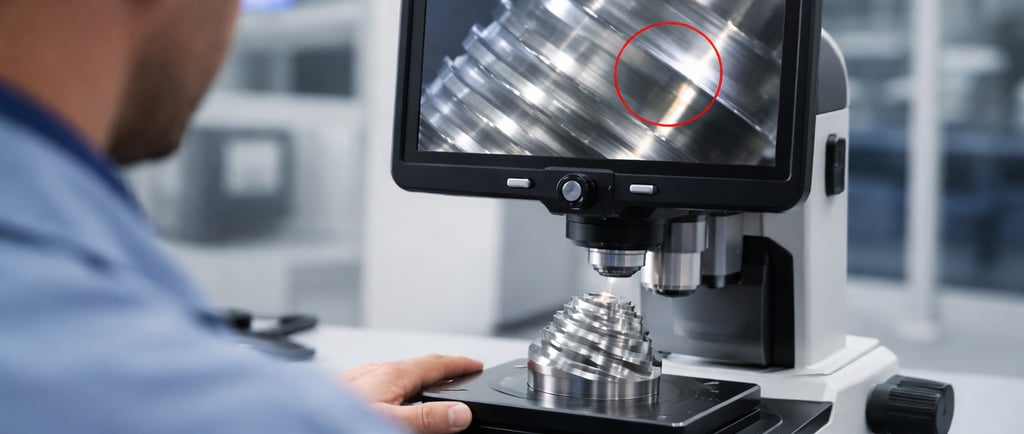
Visual inspection is one of the oldest quality control methods in manufacturing, and yet it is still one of the most critical. Long before advanced sensors, automation, and data systems, manufacturers relied on trained eyes to identify issues that measurement alone could not reveal.
Despite advances in technology, visual inspection remains a cornerstone of quality control (QC), quality assurance (QA), and business integrity. When it is undervalued, under-resourced, or performed using sub-standard equipment, the cost is often far greater than many organisations realise.
Visual Inspection as the First Line of Defence
In many manufacturing environments, visual inspection is the first opportunity to identify problems before they propagate through the process.
Surface defects, cosmetic issues, contamination, assembly errors, and damage are often:
Immediately visible
Difficult to detect with dimensional measurement alone
Early indicators of deeper process issues
Effective visual inspection prevents unnecessary downstream inspection, rework, and scrap by stopping problems at the earliest possible stage.
The Link Between Visual Inspection and Quality Culture
Strong QA systems are built on consistency and confidence. Visual inspection plays a key role in reinforcing that culture.
When operators are provided with:
Clear inspection criteria
Appropriate magnification and lighting
Reliable, repeatable equipment
They are far more likely to make confident, consistent decisions. Conversely, when visual inspection is treated as a low-value task and supported with inadequate tools, subjectivity increases, and so does risk.
Inconsistent visual inspection undermines trust, not just in the inspection process, but in the wider quality system.
The Hidden Cost of Sub-Standard Equipment
One of the most common issues seen in the field is the use of equipment that is not fit for purpose. Poor lighting, inadequate resolution, unstable optics, or worn components all contribute to unreliable inspection outcomes.
The cost of this is rarely visible on a balance sheet, but it shows up in:
Missed defects
False rejects
Inconsistent decisions between operators or shifts
Increased customer complaints
Damage to brand and reputation
In regulated or safety-critical industries, the consequences can extend far beyond financial cost, impacting compliance, traceability, and long-term customer trust.
Visual Inspection and Business Integrity
Quality is not just a technical issue, it is a business one.
Visual inspection decisions influence:
Product release
Customer acceptance
Warranty exposure
Audit outcomes
When visual inspection is weak, organisations risk making decisions they cannot confidently stand behind. Over time, this erodes credibility with customers, regulators, and internal stakeholders alike.
Investing in robust visual inspection is not about perfection, it is about defensible decision-making.
Training, Standardisation, and the Right Tools
Effective visual inspection requires more than just equipment. It relies on:
Proper operator training
Clear pass/fail criteria
Standardised inspection setups
Equipment that delivers consistent, repeatable images
When these elements are aligned, visual inspection becomes a powerful and reliable part of the quality system rather than a subjective bottleneck.
The Cost of Under-Appreciation
The true cost of under-appreciating visual inspection is not the price of the equipment, it is the cost of poor decisions.
Cutting corners on visual inspection capability often leads to:
Increased rework and scrap
Lost production time
Customer dissatisfaction
Regulatory risk
Long-term damage to brand integrity
In contrast, investing in the right tools and processes delivers clarity, confidence, and control.
Final Thoughts
Visual inspection may not always feel as advanced as other quality technologies, but it remains fundamental. When done well, it protects quality, supports QA systems, and reinforces trust throughout the business.
When done poorly, it quietly undermines everything built on top of it.
The difference lies not in complexity, but in intent, capability, and commitment to doing it properly.
Contact
Questions? Reach out for tailored advice.
Phone
© 2026. All rights reserved.
Company Number: 16933717
Follow us!