🔬 Got a phone? You've got a microscope. Try JAIMS Explorer FREE →

Choosing The Right Microscope
What inspection system is right for your business. A simple Optical vs Digital vs Hybrid overview may help you decide.
OPTICAL VS DIGITAL VS HYBRID
Jamie Greatrix | Founder & Director of JAIMS
12/17/20252 min read
Choosing the Right Microscope: Optical vs Digital vs Hybrid
With so many microscope options available today from traditional optical models to advanced digital systems, choosing the right one can feel overwhelming.
Each technology has its strengths, limitations, and ideal use cases. My goal as a microscopy consultant is to help labs, manufacturers, and educators make informed choices focusing on clarity, workflow, and long-term value rather than simply “what’s new.”
Optical Microscopes (e.g. Euromex)
Pros:
True-to-life image quality with no digital processing or pixelation.
Excellent depth perception through stereo or compound setups.
Reliable, low-maintenance, and long lifespan.
Highly customizable with lenses, filters, and illumination options.
Cons:
Viewing limited to eyepieces, not ideal for group review or sharing.
Requires proper alignment and experience to achieve best results.
Can cause neck or eye strain over long sessions.
Best suited for: Metallurgy, life sciences, and materials analysis where
direct visual inspection and fine detail are essential.
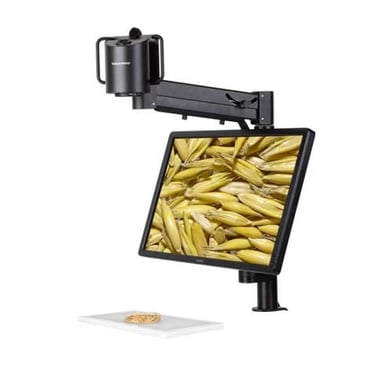
Digital Microscopes (e.g. Tagarno)
Pros:
Live image displayed on-screen, perfect for collaboration, documentation, and remote review.
Fast, repeatable inspection with integrated measurement and annotation tools.
Ergonomic design eliminates eye strain from prolonged use.
Great for training and communication across teams.
Cons
Image fidelity can depend on lighting setup and camera sensor quality.
Limited depth perception compared to optical viewing.
Typically a higher initial cost for advanced models.
Best suited for: Electronics, manufacturing, and QA environments where speed, sharing, and traceability matter most.

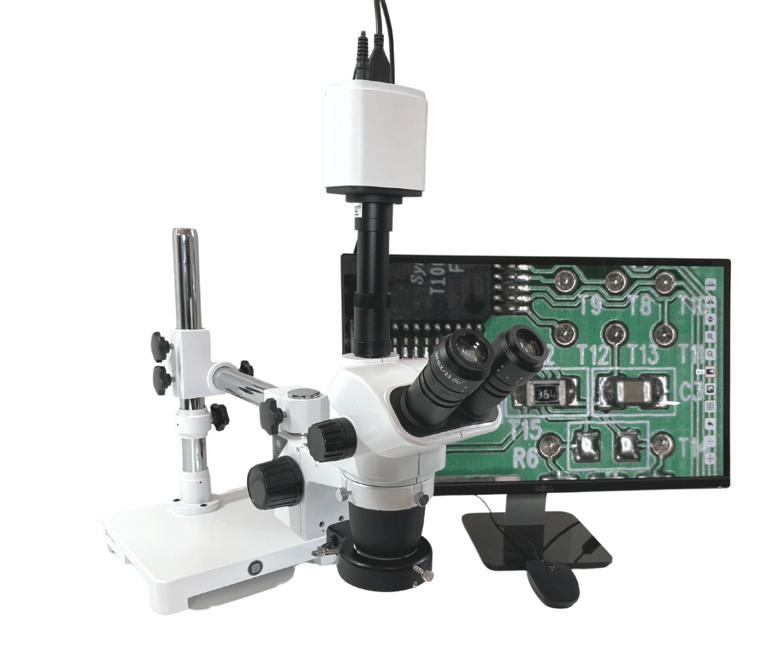
Hybrid Systems (Optical Microscopes with Trinocular Digital Cameras)
Pros:
Combines optical clarity with digital capture and sharing.
Cost-effective upgrade path for existing optical microscopes.
Ideal for documentation and teaching applications.
Cons:
Still involves switching between eyepieces and the screen.
Image quality depends on the digital camera and adapter setup.
Best suited for: Laboratories or universities transitioning to digital workflows without replacing trusted optical systems.
The Right Tool for the Right Job
There’s no one-size-fits-all solution in microscopy. The key is to start with your application, what you’re inspecting, documenting, or measuring, and let that guide the technology choice.
Whether you’re evaluating surface roughness, inspecting PCBs, or capturing educational images, the best microscope is the one that fits your workflow and helps you see and share clearly.
If you’d like an independent review of your microscopy workflow or simply want to understand whether optical, digital, or hybrid technology is best suited to your application, please contact us today.


Contact
Questions? Reach out for tailored advice.
Phone
© 2026. All rights reserved.
Company Number: 16933717
Follow us!